You’ve just come back from an angiography, and the report says one or more of your heart arteries is blocked. Almost immediately, someone mentions a stent. It’s natural to pause and ask: is angioplasty really the only way?
The honest answer is that it depends on the kind of blockage you have and how it is affecting you. Many people with stable blockages are treated safely with medicines and lifestyle changes alone. Others, especially those having a heart attack, need the artery opened as quickly as possible. In this guide, we explain when blocked heart arteries can be treated without angioplasty, what those treatments involve, and when a procedure genuinely can’t be avoided.
Can Blocked Heart Arteries Be Treated Without Angioplasty?
Yes, in many cases they can. If your chest symptoms are predictable and settle with rest, doctors often begin with medicines, lifestyle changes and regular monitoring. Angioplasty is usually needed during a heart attack, when chest pain is worsening quickly, or when symptoms don’t improve despite proper treatment.
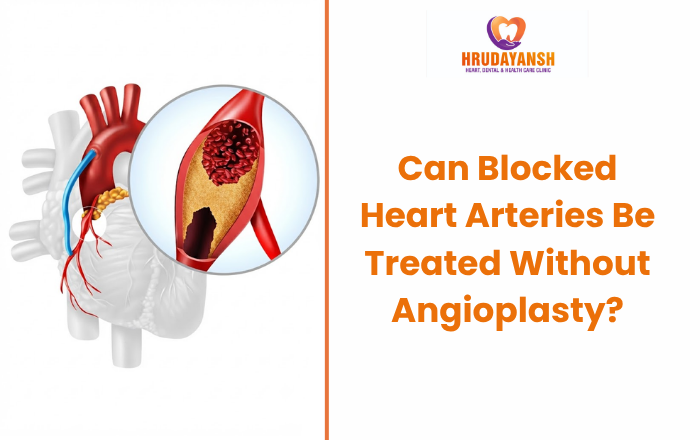
A blockage forms when plaque, a mix of cholesterol, fat and calcium, slowly builds up inside the artery wall. This condition is called coronary artery disease. Large international studies in patients with stable heart disease have shown that starting with good medical treatment protects against heart attack and death about as well as an early stent. In these patients, a stent mainly helps relieve chest pain. That is why cardiologists today don’t recommend angioplasty for every blockage seen on a scan.
Stable Blockage or Emergency? Why the Difference Matters
Stable coronary artery disease
In stable coronary artery disease, the plaque narrows the artery gradually. You may feel chest heaviness while climbing stairs or walking fast, which eases when you stop. Some people have no symptoms at all and find out during a routine checkup. This is the group where treatment without angioplasty is most often possible.
Heart attack or unstable angina
During a heart attack, a plaque cracks and a clot suddenly blocks the artery. Every minute counts because heart muscle starts dying. Emergency angioplasty, or clot dissolving medicines when a cath lab isn’t quickly available, can save a life. This is not the time to look for alternatives.
Heart Blockage Treatment Without Surgery: Your Main Options
When your cardiologist decides a stent isn’t needed right now, heart blockage treatment without surgery usually combines the following.
1. Medicines (Optimal Medical Therapy)
This is the foundation of treatment, and doctors call it optimal medical therapy. Depending on your condition, it may include:
- Antiplatelet medicines such as aspirin to reduce the risk of clots
- Statins to lower LDL cholesterol and make plaque more stable
- Beta blockers and nitrates to reduce chest pain
- Blood pressure medicines such as ACE inhibitors when needed
- Medicines to control diabetes, if present
These medicines won’t “melt” the blockage. What they do is calm the plaque and lower the chance of it cracking, which is what triggers most heart attacks. You can read more about reducing cholesterol with diet and treatment in our detailed guide.
2. Lifestyle Changes That Protect Your Arteries
Medicines work best when daily habits support them. The changes that matter most are:
- Stopping smoking and all tobacco, including gutkha and kharra
- Eating more vegetables, dals, whole grains and fruit while cutting down on fried snacks, excess oil, ghee and salt (see our diet guide for heart patients)
- Walking or other regular activity, once your doctor confirms it is safe
- Keeping blood pressure, sugar levels and weight under control
- Sleeping well and managing stress
3. Cardiac Rehabilitation
Cardiac rehabilitation is a supervised program of exercise, diet advice and education. It helps you build stamina safely and stick to the habits that keep plaque from growing.
4. EECP Therapy
Enhanced External Counterpulsation (EECP) uses cuffs on the legs that inflate and deflate in rhythm with your heartbeat. It is mainly offered to people with ongoing angina who aren’t suitable for angioplasty or bypass. It may ease symptoms for some patients, but it does not remove blockages and should not replace proven treatment.
5. Bypass Surgery (CABG)
Not needing angioplasty doesn’t always mean medicines alone. When several arteries or the left main artery are severely blocked, or in some people with diabetes and weak heart pumping, bypass surgery may be the better long term option. Our article on angioplasty vs bypass surgery explains how doctors choose between the two.
Can Heart Blockage Be Reversed Naturally?
Strong cholesterol control and a healthy lifestyle can stop plaque from growing, and some studies show slight shrinkage over time. However, a significant blockage rarely disappears completely with diet, home remedies or supplements.
Be careful with claims that garlic, lemon and ginger mixtures, or chelation therapy can “dissolve” blockages. There is no reliable evidence for them, and stopping prescribed medicines to try them can be dangerous.
When Is Angioplasty Necessary?
Your cardiologist may recommend angioplasty if you have:
- A heart attack, where it is often lifesaving
- Unstable angina, meaning new, worsening or resting chest pain
- Chest pain that limits daily life despite proper medicines
- Tests showing a large part of the heart isn’t getting enough blood
- Certain high risk blockage patterns seen on angiography
How Doctors Decide the Right Treatment
The decision isn’t based on the blockage percentage alone. Your doctor looks at your symptoms, heart function and test results together. This may include an ECG, echocardiography, a stress test and coronary angiography. Sometimes a pressure measurement inside the artery is done to check whether a narrowing is actually reducing blood flow.
Don’t Wait in These Situations
Call for emergency help or go to the nearest hospital if you have chest pain lasting more than a few minutes, pain spreading to the arm, jaw or back, sudden breathlessness, cold sweat or fainting.
Frequently Asked Questions
1. Can heart blockage be treated with medicines alone?
Yes, many people with stable heart blockages are treated with medicines and lifestyle changes alone. This works best when chest pain is mild or absent and tests show the heart is getting enough blood. Regular follow-up is essential.
2. What percentage of heart blockage needs a stent?
There is no single cutoff. A narrowing of about 70% or more in a major artery, or 50% in the left main artery, is usually considered significant. Even then, the decision depends on symptoms and whether tests show reduced blood flow.
3. Is EECP a substitute for angioplasty?
No. EECP may help relieve angina in selected patients who can’t have angioplasty or bypass, but it doesn’t open blocked arteries and isn’t used during a heart attack.
4. Can a blocked heart artery open on its own?
A significant blockage usually doesn’t clear by itself. In some people, the heart slowly develops small natural bypass vessels called collaterals, which can improve blood supply around the narrowing.
5. Is it safe to delay angioplasty if my doctor suggests it?
It depends on why it was suggested. During a heart attack or unstable angina, delay can be dangerous. For stable disease, it is reasonable to ask your cardiologist about medical treatment or a second opinion before deciding.
Get the Right Advice for Heart Blockage in Baner, Pune
Finding out that your heart arteries are blocked is worrying, but it doesn’t automatically mean you need a stent. Whether blocked heart arteries can be treated without angioplasty in your case depends on your symptoms, test results and overall heart health. The right plan is one made after a careful look at all of it.
If you’d like your reports reviewed or need clarity on your treatment options, you can consult Dr. Digvijay Nalawade, Cardiologist with 18+ years of experience, at Hrudayansh Multispeciality Clinic, Baner. He can explain whether medicines, angioplasty or bypass suits your situation and guide your follow-up care.
– Hrudayansh Multispeciality Clinic
2nd Floor, Imperial Commercial Spaces, S 12/14, Pancard Club Rd, Behind Murkute Garden, Baner Gaon, Baner, Pune, Maharashtra 411069
Phone: 97307 11491
WhatsApp: Click here to WhatsApp us