
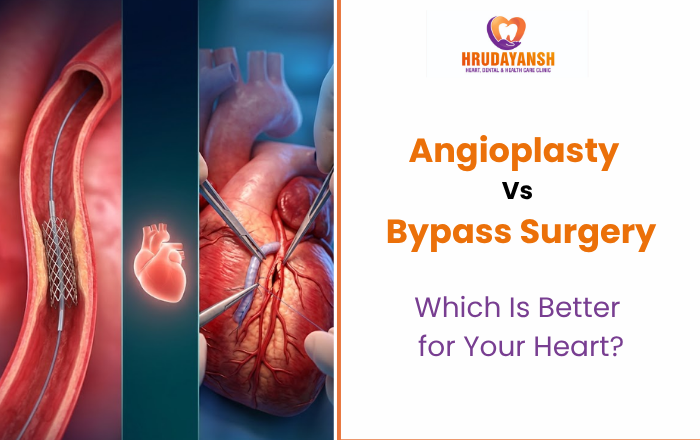
If you or someone close to you has been told that your heart arteries are blocked, the next question is almost always the same “Do I need angioplasty or bypass surgery?“ It’s a scary moment, and it’s completely normal to feel confused. Both procedures save lives, but they work differently and suit different situations. Let’s break it down in simple, clear language so you can walk into your doctor’s appointment feeling informed and confident.
What Is Angioplasty?
Angioplasty (also called PCI — Percutaneous Coronary Intervention) is a procedure that opens up a blocked or narrowed heart artery without open-chest surgery.
A thin tube is passed through your wrist or groin into the blocked artery. A small balloon is inflated to push the blockage open, and in most cases, a stent (a tiny wire mesh) is placed to keep the artery open. The whole thing usually takes 1 to 2 hours, and most patients go home the next day.
Angioplasty works best when:
- You have 1 or 2 blocked arteries
- You need emergency treatment during a heart attack
- You are not fit enough for major surgery
What Is Bypass Surgery?
Bypass surgery (CABG — Coronary Artery Bypass Grafting) is a bigger operation. The surgeon takes a healthy blood vessel from your leg, arm, or chest and uses it to create a new route around the blocked artery — like building a detour on a road.
Surgery takes 3 to 6 hours, and recovery takes much longer — usually 6 to 12 weeks.
Bypass surgery works best when:
- You have 3 or more blocked arteries
- Your blockages are complex or in difficult locations
- You are a diabetic patient with multiple blockages
Angioplasty vs Bypass Surgery: A Simple Comparison
| Factor | Angioplasty | Bypass Surgery |
|---|---|---|
| Type of Procedure | No open surgery | Open-heart surgery |
| Time Taken | 1–2 hours | 3–6 hours |
| Hospital Stay | 1–2 days | 5–7 days |
| Recovery Time | 1–2 weeks | 6–12 weeks |
| Best For | 1–2 blockages | 3+ blockages |
| Risk of Repeat Procedure | Slightly higher | Lower |
Which One Is Actually Better?
This is the question everyone asks — and the honest answer is: it depends on your heart condition.
There is no one-size-fits-all answer in angioplasty vs bypass surgery. Your doctor will look at:
- How many arteries are blocked
- How severe the blockages are
- Whether you have diabetes
- Your age and overall health
- Your ability to handle major surgery
The landmark SYNTAX Trial — one of the largest heart studies ever done — found that patients with complex, multi-vessel blockages had better long-term outcomes with bypass surgery. But for simpler, single-vessel cases, angioplasty delivered results just as good, with far less recovery time.
Think of it this way: angioplasty is like quickly clearing a blocked drain. Bypass surgery is like building a brand new pipe. Both fix the problem — but the right choice depends on how bad the blockage is.
5 Important Differences You Should Know
1. Number of Blockages Angioplasty suits 1–2 blocked arteries. Bypass surgery is preferred when 3 or more arteries are blocked.
2. Recovery Time Angioplasty recovery is fast — most people are back to normal in 1–2 wks. Bypass surgery takes 6–12 weeks of careful recovery.ee
3. Diabetes Matters If you are diabetic with multiple blockages, most doctors recommend bypass surgery. Studies consistently show better results with CABG in diabetic patients.
4. Long-Term Results Bypass surgery tends to last longer and requires fewer repeat procedures in complex cases. Modern drug-eluting stents used in angioplasty have reduced re-blockage rates to under 10%.
5. Emergency Situations In a heart attack, angioplasty is almost always the first choice because it can be done quickly without the preparation that major surgery requires.
Life After Treatment – What to Expect
After Angioplasty:
- You’ll be on blood-thinning medicines for at least 6–12 months
- Light activity is allowed within a week
- Regular follow-up appointments are important to check the stent
After Bypass Surgery:
- The first 2 weeks focus on rest and wound healing
- Gradual walking and light movement begin around week 3–4
- Full recovery and return to work takes about 2–3 months
One thing both procedures have in common: they are treatments, not permanent cures. Eating healthy, staying active, quitting smoking, and managing stress are what keep your heart healthy long after the procedure.
Frequently Asked Questions (FAQ)
Q: Is angioplasty a permanent fix?
It is very effective, but there is a small chance (5–10%) of the artery narrowing again. Living a heart-healthy lifestyle lowers this risk significantly.
Q: Is bypass surgery very risky?
It is a major operation, but it has a success rate of around 95–98% when done by an experienced surgeon. Your doctor will check if you are fit for surgery before recommending it.
Q: Which procedure costs less in India?
Angioplasty generally costs between ₹1.5 to ₹3.5 lakhs. Bypass surgery typically ranges from ₹2.5 to ₹5 lakhs or more, depending on the hospital and complexity.
Q: Can angioplasty be done more than once?
Yes, it can. But repeated procedures carry higher risks, which is why lifestyle changes after the first angioplasty are so important.
Consult Dr. Digvijay Nalawade — Cardiologist in Baner, Pune
Still unsure whether angioplasty or bypass surgery is right for you? That’s completely understandable and it’s exactly why you need a cardiologist who will take the time to truly understand your condition before recommending anything.
Dr. Digvijay Nalawade at Hrudayansh Clinic, Baner, Pune is a trusted cardiologist helping patients understand their heart condition and choose the right treatment whether that’s angioplasty, bypass surgery, or other cardiac care.
Don’t wait for your symptoms to get worse. Your heart is worth taking seriously today.