Introduction
You feel fine. No pain, no dizziness, no warning signs — yet your blood report tells a very different story.
This is exactly how high cholesterol works. It builds up silently inside your arteries for years, and most people don’t find out until something serious — like a heart attack or stroke — forces them to pay attention.
The good news is that high cholesterol is one of the most manageable conditions when caught early. In this blog, we’ll break down what causes it, what signs to look for, and what actually works to treat it — explained in plain, simple language.
What Is High Cholesterol?
Cholesterol is a fatty substance made by your liver. Your body needs some of it — it helps make hormones and supports cell function. The problem begins when there’s too much of the wrong kind in your blood.
There are two main types:
LDL cholesterol (bad) — builds up in artery walls and causes blockages
HDL cholesterol (good) — helps clear cholesterol from the blood
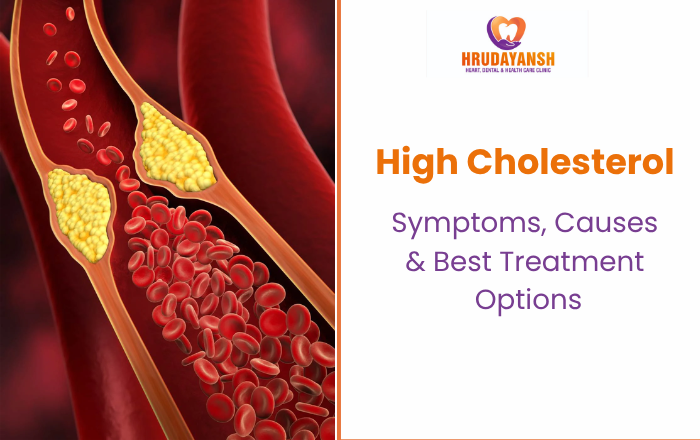
When your LDL cholesterol stays high for too long, it gradually narrows your arteries, raising your risk of heart attack and stroke. A total cholesterol level above 200 mg/dL is considered high and needs attention.
Warning Signs of High Cholesterol
Here’s the hard truth: high cholesterol usually has no symptoms at all. Most people feel completely normal while the damage quietly happens inside.
In severe cases, some physical signs may appear:
- Xanthomas — yellowish, waxy lumps under the skin near the elbows or knees
- Xanthelasma — small yellow patches on or around the eyelids
- Corneal arcus — a grey or white ring around the outer edge of the eye
- Chest tightness or pain — a late sign that arteries are already narrowed
- Unexplained tiredness or breathlessness — often ignored, but worth checking
If you notice any of these, get a cholesterol test done right away. And even if you feel perfectly healthy — if you haven’t checked in a while, now is the right time.
What Causes High Cholesterol?
High cholesterol doesn’t always come from eating too much ghee or fried food. Several factors play a role:
- Poor diet — too much saturated fat from red meat, butter, and processed foods raises LDL cholesterol
- Lack of physical activity — sitting too much lowers your “good” HDL cholesterol
- Excess body weight — especially belly fat, which directly worsens your cholesterol levels
- Genetics — some people inherit a condition called familial hypercholesterolaemia, which causes high cholesterol from birth, regardless of their diet
- Diabetes — disrupts how the body processes fats in the blood
- Thyroid issues — an underactive thyroid slows the removal of LDL cholesterol from the body
- Certain medicines — including some blood pressure drugs and steroids
How Is High Cholesterol Diagnosed?
A simple blood test called a lipid profile checks your total cholesterol, LDL, HDL, and triglycerides. You fast for 9–12 hours before the test.
If you’re over 20, doctors recommend checking your cholesterol every 4–6 years — and every year if you have diabetes, blood pressure, or a family history of heart disease.
Treatment Options for High Cholesterol
Medicines That Help
When lifestyle changes aren’t enough, your doctor may prescribe:
- Statins (e.g., atorvastatin, rosuvastatin) — the most common cholesterol-lowering medications, proven to reduce LDL by up to 50%
- Ezetimibe — reduces how much cholesterol your intestine absorbs
- PCSK9 inhibitors — injectable medicines for very high LDL cholesterol or statin intolerance
- Fibrates — mainly used to lower high triglycerides
Never start or stop cholesterol medicines on your own. Always follow your doctor’s guidance.
Lifestyle Changes That Actually Work
Small, consistent habits make a real difference in managing high cholesterol:
- Eat more fibre — oats, lentils, fruits, and vegetables help lower LDL cholesterol naturally
- Exercise 30 minutes a day, 5 days a week — even brisk walking counts
- Cut down on fried foods, red meat, and packaged snacks
- Quit smoking — it lowers your “good” HDL cholesterol significantly
- Keep your weight in a healthy range
- Manage stress — chronic stress raises cholesterol and blood pressure together
When Should You See a Doctor?
See a cardiologist if your cholesterol stays high despite lifestyle changes, or if you have chest pain, breathlessness, or a family history of early heart attacks.
Consult Dr. Digvijay Nalawade — Cardiologist at Hrudayansh Multispeciality Clinic, Baner
If your cholesterol report has you worried, don’t wait. Dr. Digvijay Nalawade, a trusted cardiologist at Hrudayansh Multispeciality Clinicin Baner, Pune, helps patients understand their cholesterol levels, find the root cause, and follow a treatment plan that fits their life — whether that means diet changes, medicines, or both.
Book your appointment today and take the first step toward a healthier heart.